Showing posts with label atheism. Show all posts

Monday, August 15, 2016

Conversations We Need to Be Having: an Ongoing Discussion with Galina Krasskova (Pt. 8)

The objections from Beckett & Co. re "spiritual impurity" all seem to boil down to two big complaints: this is too much work, and it makes us feel dirty. There's this idea that staying spiritually pure is an onerous never-ending task which will leave you with deep emotional scars. To me it's as simple as "respect your Gods and avoid people who do not respect them; exercise caution in liminal spaces like graveyards and maternity wards; honor your gut instinct if it tells you something or someone is tainted; if you cannot avoid impurity ward beforehand and cleanse afterwards." And I'm at a loss to see how any of that is particularly onerous or traumatic.

That being said, I can see how the term might seem intimidating or off-putting to someone unfamiliar with the concept. And so I think it's worthwhile to offer a quick and dirty basic description of what spiritual impurity is and how you avoid it.


GK:  I think in part it's unresolved damage from Christian upbringings. There's also this misunderstanding of pollution and miasma that ascribes a value judgement to the idea of being polluted, as though when someone is in miasma, we're saying they're a bad person. That's not the case at all. Miasma is generally a neutral thing, just like taking a bath and washing one's hair ought to be. You do or are exposed to X, you're miasmic, you clean. It shouldn't have any particular charge more than that. However, all of that being said, perhaps what they're finding "onerous" and "traumatic" is the idea that they may have to take responsibility for themselves spiritually in a way predicated on the idea of a hierarchy of Powers. I read a blog recently wherein the writer (and yes, I did feel absolutely polluted after reading it) said that while she acknowledges herself as a polytheist, she doesn't see any arguable difference between herself and the Gods, and doesn't consider Them greater than herself, and it doesn't matter by what names They are called" and this after having spent years in Heathenry. I thought, "sweetheart, maybe that assed up notion is why your life is shit." My comment of course reflects my disgust with the complete lack of character displayed here, but in terms of miasma, any miasma present would reflect the lack of right relationship with the cosmic hierarchies: gods and ancestors, the lack of relational integrity and specifically because this is a willful, volitional lack of respect. I really do think that the push back against ideas of pollution and miasma have more to do with certain anti-structural sentiments in the communities than perhaps with anything else. Traditions after all are predicated on specific structures. These things are the necessary scaffoldings that allow traditions to unfold. If you want to weaken a tradition simply attack the particularities of it, attack the scaffolding.

Part of it also is people don't, because of their backgrounds, want to exclude anyone or anything -- because they've been excluded. Consequently they are tolerant and permissive to a fault. We saw this with the Kenny Klein thing. They didn't want to exclude him, made excuses for him because in the past their own feelings had been hurt and now they didn't want themselves to seem bigoted or judgmental. I'm sorry though: some things one needs to be judgmental about, and in Kenny Klein's case child abuse fits the bill. So i think we're seeing multiple threads coming together here to create a storm of antagonism and purposeful misunderstanding. It doesn't help that 'purity' is a very loaded term in monotheism, one that is often used to attack women's sexuality and behavior. This definition of purity has absolutely nothing to do with miasma.

Then again, the cynic in me wants to point out that if we really took miasma seriously as a community, if we were really each doing the requisite cleansings that our Gods and ancestors required, that we felt we needed to do in order to maintain good discernment and good integrity of being before the Gods and spirits, maybe we'd see through some of the bullshit currently being spread throughout our communities.

Your most recent blog entry talked about the "Pagan/Heathen Atheists" who are openly hostile to any forms of devotion. I think this is the big reason (or one of the big reasons) we need to hold the line on the issue of the Gods' literal existence. Yes, there is room for debate and discussion on the nature of the Gods: there would have to be, seeing as how They are Mysteries beyond our comprehension. There is room for crises of faith and for behaving with honor and dignity in the face of your doubts. But there can't be room for people who refuse to treat our beliefs with respect and who refuse to bend their knee before the Gods. If they're just symbols, what's the big deal? You can put your hand over your heart when you hear the National Anthem: it won't kill you to say a prayer for Odin or Apollo. But of course that question never gets answered, and instead we're expected to conform to their expectations.

GK: What angers me the most about atheist incursions is summed up in an encounter I had awhile back that I wrote about here. In that piece, I talk about an encounter that I had a local shop. An atheist was talking about how he was Heathen, but only because he liked to hang out with his dudebros and drink, and he thought the Viking ethics were good to live by. I challenged him, on his appropriation of our religion and he said "well, it's not a religion to me so it doesn't matter." The extreme self-centeredness is, I think particularly enlightening. There is zero respect for the religion, the tradition, or the people and communities practicing it. Moreover these people come in and expect us to lower our standards to their level, to accommodate them in their impiety and ignorance. Our traditions are viewed as something for them to use and enjoy, as something disposable, and they do not care about the hurt and harm that they are doing. They do not care about the damage they may cause. It's all about them, and making sure that no one else can have anything deeper and more significant than the experiences they will allow themselves. It's holding not just spiritual mediocrity and shallowness, but spiritual absence up as a life goal. There is a contempt for the Gods because they will not humble themselves to acknowledge that something greater than they themselves exists. And because they won't, they cannot stand that others do and reap the not insignificant benefits of piety. They can't even have a live and let live philosophy, and note they only ever come into our communities demanding that, we never go into theirs demanding that they acknowledge the Gods and change their atheist beliefs.

I agree with you: this must of necessity be our hard line: there is no room in our traditions for people who refuse to treat our beliefs with respect and who refuse to bend their knees before the Gods. No room at all and we need to hold the line against this pollution.

Wednesday, May 18, 2016

Giving The Devil His Due: of Suave Satanists and Pagan Paupers

I recently had the pleasure of attending the Church of Satan's 50th Anniversary celebration: I mingled with old friends, made new ones, and received much invaluable input on the LaVey biography.  But while I plugged my project I also spent time admiring the work of other Satanists.  Famous attendees included  model and "real doll" creator Marilyn Mansfield; Blood Axis co-founder Michael Moynihan; BoySetsFire lead Nathan Gray (with Jimmy Psycho as his opening act); wrestling legend James Mitchell; and sexologist and Old Nick publisher Dr. Robert Johnson.  And for each big (or medium-sized) name there were many soon-to-be-famous performers and skilled artisans.  I was particularly impressed by Hydra Morningstar's woodburning art, Aden Ardennes'  militant eroticism and John H. Shaw's metalwork but many attendees make a living doing what they love.

With its ties to Heavy Metal, Satanism attracts a fair number of blue-collar types: Neopaganism has always skewed more college-educated and professional-class. Yet as I was surrounded by Satanic success I could not help but contemplate Neopaganism's downward mobility. Every day my Facebook feed is graced with Gofundme solicitations to pay Lord Breakswind's rent, cover HP Sparklefart's medical expenses, or feed Lady Twitchbottom's cats.  Unemployment, garnishment, eviction ... your average Neopagan blog has more financial misfortune than a country music CD.

There are other factors at work here.  Satanism holds a dim view of whining: Anton LaVey cautioned Satanists "Do not tell your troubles to others unless you are sure they want to hear them" and "Do not complain about anything to which you need not subject yourself."  There are certainly business-savvy Pagans and financially incompetent Satanists (Anton LaVey being the most famous example of the latter).  But in the end it is hard to avoid the conclusion that Satanism is a financially salutary philosophy whilst Neopaganism is financially corrosive.

Both Satanism and Neopaganism are atheistic religions.  They speak of archetypes and symbols rather than Gods; they ground the Divine in the human experience rather than grounding the human experience in the Divine; they see ritual as psychodrama rather than worship.  Both have a keen interest in magic and the paranormal, and both draw symbolism from Freemasonry and the works of Eliphas Levi.  But once we get past these surface similarities we will see some important philosophical differences -- differences which may play out in their adherents' personal and professional lives.

One of American Neopaganism's central creation myths involves the "Burning Times" -- Church persecution against followers of Ye Olde Religione.  This myth slaps together images from various religious persecutions -- the Roman Catholic Inquisition, the Puritan Court of Oyer and Terminer, contemporary "witch killings" in Africa and India -- and throws them atop a narrative based on their (mis)understanding of the Civil Rights movement.  According to that version of history, Black Americans were eternal victims who were shot, lynched, whipped, abused and kept in the direst poverty until White Americans took pity on them. By establishing themselves as victims in the public eye and displaying their various injuries like a beggar showing his sores, Neopagans hope to be recognized as equals and take their place alongside the Huxtables in Respectable American Society. 

This conception is unfathomably condescending and patronizing: it is also incorrect. Hence, any game plan built upon it is doomed to failure from the start. Pity may get you spare change, but it won't get you respect.  To make matters worse, Neopaganism has retained its 60s countercultural distaste for wealth.  Poverty and persecution become emblems of virtue, not misfortunes to be avoided: financial success is a sign of moral turpitude.  If you think money a thing to be avoided, you can hardly be surprised when money avoids you. If you fear power's corrupting influence you need never fear being tainted by its presence. 

By contrast, Satanism sees the finer things in life as Indulgences -- and the Satanic Word of the Aeon is "Indulgence." Power and wealth aren't dangerous snares which distract you from what's really important in life: they are tools you can use to make your lives happier, healthier and more productive.  (Satanists also realize "money can't buy happiness" is another way of saying "those grapes were sour anyway").  LaVey saw Satanists as an "Alien Elite" surviving and thriving amidst an indifferent and sometimes hostile world. Some -- OK, many -- used this as an excuse to puff themselves up in spectacularly silly fashion. Those with greater discernment found a powerful model for deportment and a role toward which they could strive. 

American Neopaganism is doggedly egalitarian and the Neopagan community is rife with geek social fallacies. Satanists are far more comfortable with stratification: they see no shame in being successful, or in expecting friends and acquaintances to be successful. This means less charity wasted on ingrates and less time spent cleaning up other peoples' messes.  When you surround yourself with strivers and achievers, you invariably find yourself following their lead: the converse holds true as well.  Satanists are encouraged to give walking papers to "psychic vampires" -- a metaphor which LaVey used for those who take more than they give and who use your feelings of guilt and obligation to their advantage. And of course nobody can play at top form when they are hosting parasites. 

Both Satanism and Neopaganism are magical religions. They are open to the possibility that one can see positive benefit from magical rituals and work, and many of their adherents use magical rituals.  But Neopagans generally have multiple taboos connected to their use of magic. They are not to use their magic to do harm or control the will of another, lest their attacks be returned to them threefold. Using magic in your own self-interest is looked upon with suspicion, as is taking money for magic.  No such taboos exist for Satanists: they can cast Lust and Destruction spells with nary a moment's worry about losing favor with their coreligionists.

But that surface similarity masks a profound and very important difference.  Neopaganism still accepts the distinction between body and spirit: Satanism is a carnal religion which believes there is nothing spiritual.  Neopagan magicians spend a great deal of time engaging in "astral travel," "creative visualization" and other practices which look to Muggles very much like daydreaming.  Their visions of magic are often drawn from fantasy fiction and movies: their "magical clothes" evoke a Renfaire never-was.  Satanism roots magic in a "dark force in nature" and is concerned with it only insofar as it can better the magician's standing in the here-and-now.  As CoS High Priest Peter H. Gilmore says in his essay "The Magic of Mastery:"
There is true magic in the mastering of skills. Most members of the herd will look with awe upon a talented and accomplished practitioner.  To them, the producing of quality results with the effortless-seaming ease of mastery will appear to be pure wizardry... 
So, to be a master of magic , toss out those musty grimoires, unless they're printed by Chilton. Pick some field and become an advanced practitioner. Be a writer, pastry chef, seamstress, flower arranger, plumber, sculptor, carpenter, photographer, upholsterer, elecctrician, pilot, beautician, steelworker, medic, whatever you have an affinity for. You'll amaze those around you, gain their respect and envy, achieve material success and you won't even have to say "Shemhamforash" in public.

Thursday, September 5, 2013

Die Kehre: Anton LaVey after 1975

1966-1975 (Anno Satanas I - IX, if you prefer) is often considered the Church of Satan's Golden Age. Three weeks before Walpurgisnacht 1966 Time magazine asked "Is God Dead?" But while the faithful kept vigil at a heavenly hospice, Satan was alive, well and playing to an ever-growing crowd. Grottos were springing up all around the world; celebrities like Sammy Davis Jr. and Jayne Mansfield proudly proclaimed themselves Satanists; major newspapers and magazines featured LaVey's scowling visage and provided a sympathetic platform for his ideas. 

Then Anton LaVey tore down the edifice he had built. After years of publicity-seeking ranging from pet lions to topless Witches' Sabbaths, he turned away from the spotlight: he dissolved the Grottos and reduced the Church of Satan to a membership card and an irregularly-produced newsletter. When he finally re-emerged, the one-time Black Pope had reinvented himself as a "junkyard philosopher" whose carnal religion was now a mere "aesthetic ideal."   His post-1975 work drew from sources ranging from totalitarian art to film noir but showed little interest in the occult trappings of the early Church.  And while The Satanic Bible was an affectionately sarcastic message to the benighted, LaVey's later  writings feature a bleak misanthropy reminiscent of Dostoyevsky's Notes from Underground. 

This material is generally ignored by LaVey's most ardent imitators, while The Satanic Bible gets extensively plagiarized, misquoted and misunderstood. The visual cliches of Satanism -- Baphomets, black robes, shaved heads and goatees, etc. -- are displayed in a style which can best be described as the bastard spawn of Hammer Films and Hot Topic.  Then there are the inevitable Jackass-level stunts to "raise public awareness" and "make Satanism relevant again." Instead of looking back to the days of Nehru jackets and love beads, they might consider why LaVey rejected what they find valuable. 

Much as he thought he could keep a lion in a San Francisco Victorian, LaVey thought he could tame and control the human religious urge. In 1970 he commented that he gave people “Ayn Rand’s philosophy with ceremony and ritual added.” An early Church handout, reproduced in The Satanic Bible as "The God You Save May Be Yourself," makes his intentions clear.
Man needs ritual and dogma, but no law states that an externalized god is necessary in order to engage in ritual and ceremony performed in a god's name! Could it be that when he closes the gap between himself and his "God" he sees the demon of pride creeping forth - that very embodiment of Lucifer appearing in his midst? He no longer can view himself in two parts, the carnal and the spiritual, but sees them merge as one, and then to his abysmal horror, discovers that they are only the carnal - AND ALWAYS WERE! Then he either hates himself to death, day by day - or rejoices that he is what he is! 
If he hates himself, he searches out new and more complex spiritual paths of "enlightenment" in hopes that he may split himself up again in his quest for stronger and more externalized "gods" to scourge his poor miserable shell. If he accepts himself, but recognizes that ritual and ceremony are the important devices that his invented religions have utilized to sustain his faith in a lie, then it is the SAME FORM OF RITUAL that will sustain his faith in the truth - the primitive pageantry that will give his awareness of his own majestic being added substance.
LaVey envisioned ritual as a celebration and a release valve. You rid yourself of unnecessary guilt and "white light" conditioning; you express anger or desire; you discharge unnecessary tension. After the ritual ends you do something worthwhile and enjoyable with your life.  Ceremonies were tools and Satan was a useful symbol: both were a means to an end, not an end in themselves.  But for many of his followers the map became the territory. LaVey told them there were no gurus and they made him their guru. He said no god gave a shit about them and they swore eternal allegiance to their Lord and Master Satan. They turned tools into holy symbols and psychodrama into worship: the cure became yet another form of the disease.

Though the Church of Satan grew dramatically during that period, LaVey learned that bigger is not always better. Bigger means more warm bodies seeking entertainment. Bigger means more broken people looking for a healer. Bigger means delegating responsibility to subordinates -- something that never came easy to Anton LaVey -- and being blamed when they pull stunts ranging from embarrassing to criminal. As LaVey told Blanche Barton in Secret Life of a Satanist.
It became rather embarrassing after a while. I’d step off the plane and there they’d be, all huddled together to meet me in their black velvet robes and capes with huge Baphomets around their necks. Many of our grass-roots people didn’t know how much about subtlety then, or decorum. I was trying to present a cultured, mannered imager and their idea of protest or shock was to wear their ‘lodge regalia’ into the nearest Denny’s.
What arose in place of the Grotto System was closer to the Magic Circle from whence the Church of Satan had sprung. Rather than reaching out to the masses LaVey focused on those who understood his message and were acting on it.  These people had worked out their anger against Big Daddy Jesus long ago and were ready to move on to the next step.  In those heady early days LaVey might have dreamed that Satanism would become a world movement. By 1975 he was more interested in a festival of friends where like-minded people could put his ideas into practice.  And "occultniks" were not welcome at the party.

Alas, Anton LaVey had called up that which he could not put down. Now that Ol' Splitfoot had a bible and a church, it became clear to many that he wanted to be worshipped. Understanding that bible, or even reading it, was optional. Satanic Metal took devil worship and turned it up to eleven, giving new meaning to the words "infernal noise." Later the Internet spawned a plethora of "Satanic" websites chock full of spinning skulls, inverted crosses, and spelling errors.  

Much of this material is easy enough to ignore or to mock. A sociologist might note that it functions much as the Church of Satan's early public rituals did.  A metal show or a debate on the Infernul Order of Leviuthun's forum entertains the participants: it introduces them, in a garbled fashion, to Satanism and Anton LaVey. Most will go on to other distractions. Others will miss the point entirely while some will understand. Of those a few may even become valuable and productive CoS members.  But all are internalizing elements of Anton LaVey's philosophy and disseminating them to a wider audience.  

Thursday, August 8, 2013

Of Poppies, Philosophy and Mystical Woo: for Daniel S. Hummel II

In his 2-star Amazon review of The Power of the Poppy, Daniel S. Hummel II complained that "it's loaded with way too much mystical woo and pseudo-science for [his] tastes." He further advised that I should have done more research and "better acquainted [myself] with reality before writing a book." (I'm not sure how this would have helped, since he also believes "writing and thinking are probably not [my] best qualities.")

To be or not to be?
I can't blame Mr. Hummel for being disappointed. Looking at some of his other reviews, he appears to be a diehard atheist who finds mysticism useless. A book which treats plants as sentient beings with their own agendas is likely to leave him cold.  He gave me credit for including "a few morsels of good info" so his critique was fair if harsh.  (I'm glad he didn't find Power of the Poppy a complete waste of time and wish him luck in finding a book more suited to his needs).  And while he obviously missed my point, it's my job to make my ideas clear. Perhaps I can do so by reference to one of the 20th century's most opaque thinkers, Martin Heidegger.

Heidegger is often dismissed (or celebrated) as a Luddite. As Hubert Dreyfus points out, his views on technology and science are considerably more nuanced.  In his 1954 essay "The Question Concerning Technology" Heidegger described technology as a "mode of revealing," a way of understanding and interacting with our world. He illuminates this in a famous passage:
The hydroelectric plant is set into the current of the Rhine. It sets the Rhine to supplying its hydraulic pressure, which then sets the turbines turning. This turning sets those machines in motion whose thrust sets going the electric current for which the long-distance power station and its network of cables are set up to dispatch electricity. In the context of the interlocking processes pertaining to the orderly disposition of electrical energy, even the Rhine itself appears as something at our command. The hydroelectric plant is not built into the Rhine River as was the old wooden bridge that joined bank with bank for hundreds of years. Rather the river is dammed up into the power plant. What the river is now, namely, a water power supplier, derives from out of the essence of the power station. In order that we may even remotely consider the monstrousness that reigns here, let us ponder for a moment the contrast that speaks out of the two titles, “The Rhine” as dammed up into the power works, and “The Rhine” as uttered out of the art work, in Hölderlin’s hymn by that name. But, it will be replied, the Rhine is still a river in the landscape, is it not? Perhaps. But how? In no other way than as an object on call for inspection by a tour group ordered there by the vacation industry.  
I called Papaver somniferum an ally. I could instead have discussed its relationship with Homo sapiens in terms of symbiosis.  Because it generates morphine, a plant which originated on a small strip of the Mediterranean coast now grows on six of seven continents. And while contentious at times, the relationship has by and large been mutually beneficial: most contemporary analgesics are derived directly or indirectly from opium poppies.

There's nothing mystical or pseudoscientific about symbiosis. Many flowering plants depend on pollen-carrying insects for propagation.  Others use sweet fruits to attract animals who will later scatter seeds (no pun intended) in their dung.  P. somniferum appears to use morphine as a tool to attract human attention and cultivation. This claim does not require recourse to supernatural explanations.  Nobody points to durian seeds in civet shit as proof of Intelligent Design. Neither does anybody dispute that humans can cause rapid evolutionary changes.

"Symbiosis" would be a perfectly acceptable word, one which correctly described poppy/human interaction. But it would not tell the whole story. In Heidegger's words, it would "[set] nature up to exhibit itself as a coherence of forces calculable in advance [and order] its experiments precisely for the purpose of asking whether and how nature reports itself when set up in this way." It would leave intact what Galina Krasskova calls "the Monotheism filter:" it would reaffirm the comfortable notion that H. sapiens is set apart from every other living being on the planet, endowed by the Creator evolution with an immortal soul free will and the capacity for reason.

Throughout Power of the Poppy I suggest that poppy has agency and sentience.  You can take that as a metaphor if you like.  Read Michael Pollan's Botany of Desire: consider the ways in which we have improved the lives of rats and cockroaches.  From there you might reconsider humanity's place in the ecosystem.  Instead of reveling in our ability to manipulate our environment, you might realize how much our environment manipulates us.  Power of the Poppy could become not a teaching tool but a catalyst for "letting-learn," an experience which changes the way you relate to yourself and your surroundings.

Do I believe that poppies literally have sentience?  I'm not entirely convinced that humans are sentient.  The jury is still out on free will: evidence suggests reason is more often used to win arguments than to discover Truth.  Crows have complex societies. are capable of co-ordinated efforts, and pass knowledge down through generations.   Gerhard Roth and Ursula Dicke note that intelligence has appeared independently among different classes of vertebrates (birds and mammals) and among different orders of the same class (i.e. dolphins and chimpanzees).  Even cabbages may be able to remember and respond to information.   I think it exceedingly unlikely that poppies have developed anything which resembles human intelligence. The concerns of plants are not the concerns of toolmaking primates: their experience of space differs vastly from that of creatures endowed with mobility.  Hummel and I share a distaste for anthropomorphism. Where our thinking diverges is on anthrocentrism.

Hummel takes it as a given that humans can only interact with nonhumans in what Heidegger disciple Martin Buber would call an "I-it" relationship. Yet for much of human history we have felt it possible and even desirable to have an "I-thou" relationship with nonhumans, to treat them as beings rather than objects.  This does not, of course, mean that those beliefs are correct simply because of tradition (the argumetum ad antiquitatem fallacy).  But it suggests, to me at least, that the misunderstanding may be on our end rather than theirs. We view their experience through our own prejudices: we assume their conception of "gods," "spirits" and suchlike are identical to our own.  This conflation lets us dismiss traditional beliefs as superstitious nonsense. But it also leads us to think we are debunking delusions when we are merely burning straw men.

Monday, February 18, 2013

LaVey and Reich: More for Chas Clifton

In a response to my earlier post on Existentialism, Archetypes and Anton LaVey, Chas Clifton said:
I would say that Pagans of the 1960-1970s were all over the map,from the vaguely pantheistic Reformed Druids of North America to the new Witches, some of whom felt that their gods were two among many, while others clung to Dion Fortune's statement that "All the gods are one god, and all the goddesses are one goddess."  
And there were a few reconstructionists about too, though not a lot.
What you're describing is a range from polytheism to duotheism with some reconstructionism and pantheism thrown in. LaVey's practices were avowedly atheistic. He didn't see the gods and goddesses as symbols of a higher Being/s but as tools to be used for personal betterment and gratification. In that, for better or for worse, he was several decades ahead of the Pagan curve.  

Confusion about LaVey's atheism is understandable.  He talked about curses decades after he stopped doing Black Masses and suggested that many seemingly unconnected events were more than "coincidence."  LaVey certainly wasn't a hard atheist whose worldview was free of supernatural and mystical elements like the Brights.  But he repeatedly rejects the idea of Satan as a personal being and consistently shoows contempt for "wooly-headed mysticism" and "occultniks."

Many of these seeming contradictions can be resolved by studying an important but oft-neglected influence on Satanism.  In the first edition of The Satanic Bible we find a dedication to, among others, "Wilhelm Reich, who knew more than cabinet‐making." In 1990's Secret Life of a Satanist we find:
An interesting sidelight to LaVey’s humanoid creations is that many human replicas of his "people" have suddenly appeared, Pygmalion-like, some time after LaVey already constructed his creation. Instead of modeling the humanoid after a person, the person seems to have been modeled after the humanoid. Anton doesn’t try to explain these "conjurings" beyond referring to a method he uses in magical rituals which he terms "cosmic superimposition," a phrase borrowed from Wilhelm Reich.
According to The Wilhelm Reich Infant Trust, in Cosmic Superimposition (1951), Reich "steps out of our current framework of mechanistic-mystical thinking and comes to a radically different understanding of how man is rooted in nature. " Compare LaVey's efforts to remove Christian conditioning via the Black Mass to Reich's work on "character armor." Reich sought to bridge the mind/body duality, while LaVey commented in The Satanic Bible that man:
... no longer can view himself in two parts, the carnal and the spiritual, but sees them merge as one, and then to his abysmal horror, discovers that they are only the carnal—AND ALWAYS WERE! Then he either hates himself to death, day by day—or rejoices that he is what he is!
And of course the "dark force in nature" bears more than a passing resemblance to orgone.  This is especially important when considering LaVey's theology.  Whether you find Reich's ideas  to be genius, quackery or some combination thereof is unimportant. What matters is that orgone is impersonal. Orgone does not hold conversations or deliver cosmic mandates: it is more like light, magnetism or electricity than any kind of spiritual entity.

Reich would certainly have been trendy enough in the 50s and 60s: orgone accumulators were used by (among others) Norman Mailer, J.D. Salinger, Saul Bellow, Allen Ginsberg, Jack Kerouac and William S Burroughs. His work combined psychotherapy and bodywork to help patients achieve full emotional expression and rid themselves of sexual repression, or, in sixties-speak, "hang-ups."  LaVey thought liberation from self-loathing and socially induced guilt was a worthy cause: his rituals used occult imagery toward that end for psychodramatic effect.  (Note that he moved away from and ultimately dumped the ceremonial magic trappings altogether when too many people started taking them literally).

But LaVey was far less impressed with Reich as a prophet of sexual liberation and "free love." He rather enjoyed a little bit of shame, saying in 1969:
I would rather be “hung-up.” It’s a lot more fun. This is why the Satanist revels in what are considered to be sins. We Satanists consider “hang-ups” to be “hang-ONS”—the very foundations of what makes our personality, our likes and dislikes what they are. We like our fetishes and resent any attempt to remove them. 
Like the carnival, LaVey's rituals exist on the edge of the orderly world.  They are a Dionysian celebration of the flesh, a multi-sensory experience designed to touch the participant on deep levels. But when the carnival moves on and the ritual chamber closes, everyone goes home empowered, or hopefully at least entertained.  Where Reich and his devotees sought an aeon-changing sexual revolution, LaVey never dreamed we would fuck ourselves into utopia.  He understood the Church was Satan's best friend too: he knew everything was nicer with a little sin sprinkled on top.  And his innate distrust of utopian philosophies only became stronger as he grew increasingly bitter.

Wednesday, August 29, 2012

Humanism and History: for Brendan Myers

Brendan Myers' recent post on Pagan humanism has inspired a lot of discussion, much of it heated.  I found it more useful than did many of the eternally most offended.  Overall, he provided a reasonably accurate portrait of a school of thought prominent in modern Paganism and Earth  Spirituality. Many people come to Paganism through a love for mythology rather than a desire to cast spells; many more come because they enjoy Pagan gatherings. Myers provided a decent summary of their beliefs and (despite his protestations) established himself as a spokesperson for this burgeoning movement. That being said, I did note a few points worthy of further examination.

Dr. Myers claims that humanist Pagans are "a kind of pagan that perhaps has not been seen since classical Greece and Rome." I might point instead to the European Renaissance. As long-forgotten Greek and Roman texts became more widely available many artists began creating new images of the old gods. Poets retold their legends and updated them for a contemporary audiences.  (For an early version of our festival scene, what about Sir Francis Dashwood's "Hell-Fire Club" and the libertine revels at his Temple of Venus).  And what about Ossian (James Macpherson) or, centuries earlier, Snorri Sturluson, who rewrote ancient legends to educate their people and to serve their own political purposes?
From what I have seen so far, Humanist Pagans tend to be uninterested in ritual, or energy work, or developing psychic powers. Some still practice magic (you don’t have to be religious to do that), but will approach the matter with a critical, scientific eye. And speaking of science, they tend to be interested in astronomy, quantum theory, evolutionary biology, and the like, and will take inspiration from Neil DeGrasse Tyson and from Bill Nye right alongside Starhawk or Crowley.
First, I note that one need not be a Pagan, a New Ager, a theist, or a follower of any sort of "woo" to practice energy work.  Even under Communist rule doctors and scholars have continued to study Qi, while Ayurvedic practitioners and Yogis work approach prana like technicians rather than acolytes.  And I'd also comment that Crowley's motto for the Equinox was "the Method of Science, the Aim of Religion." Uncle Al, like his contemporaries the Spiritualists, was passionately interested in finding the method behind the magic and in performing falsifiable, verifiable and repeatable magical acts.
Remember, the Acropolis of Athens, Stonehenge, Newgrange, and the Pyramids of Egypt, were built by Pagans. Complex astronomical instruments like the Antikythera Mechanism, and the Nebra Sky Disk, were made by Pagans. Our Pagan intellectual heritage includes poets and scientists and literary intellectuals of every kind, especially including those who wrote some of the most important and influential books in all of Western history. Homer, Hesiod, Pythagoras, Plato, and Cicero, just to name a few, all lived in pagan societies. Some of the greatest political and military leaders of all time, such as Alexander the Great, Pericles of Athens, Hannibal of Carthage, and Julius Caesar of Rome, were all pagans, or else living in a pagan society. And speaking of Pagan societies: some of today’s highest social and political values, like democracy, secular republican government, freedom of speech, and trial by jury, were invented by pagans. Even the Olympic Games were invented by pagans. Yet that fact is almost always ignored when people study the origins of western civilization. In the face of anti-pagan prejudices, it might be better to point to accomplishments like these, than to something mostly amorphous like “freedom”.
I was unaware of any campaign to deny that the Olympics had their roots in pre-Christian Greece. Neither was I aware that anyone had claimed Stonehenge, the Acropolis, the Pyramids of Giza or the other marvels Myers mentions were produced by Christians, or that Caesar, Hannibal etc. were really Christian.  While a few loud loons claim American government was founded on Biblical principles, just about everybody else recognizes the enormous debt we owe to Greece and Rome.  However, I would also point out that none of the luminaries Myers names were atheists or "humanists." Humanism has its roots in the Renaissance and Enlightenment: identifying pre-Christian philosophers as humanists is anachronistic and confusing.

In his contempt for spiritual "woo," Myers goes much further than the people he claims as role models. He takes as a given that everything in the universe is amenable to rational explanation and if we can't understand something it's only because we don't have enough data.  He assumes that the human capacity for reason and observation is such that we can explain all events using our brain power and the  tools we can create thereby.  He asserts that the old tales of spirits and ghosts and gods are just pretty stories and useful metaphors (which is admittedly kinder than thinking they are signs of mental illness). All these ideas are quite in keeping with Enlightenment-era philosophy: in most of the pre-Christian world they would have been seen as hubris, blasphemy or, at best, nonsense.

Saturday, April 7, 2012

Back to the Atheism Discussion: On the Nature of Religion

Two of my Facebook friends, Kara Rae Garland and Brian Shaughnessy, have taken exception to some of my earlier statements on atheism.  I was surprised to see they were personally offended by a few of my comments. While I've got an uncommon talent for offending people, I thought I was clear that I had no problem with atheism per se as a belief system.  As with most other belief systems, it can produce reasonably moral behavior if followed by reasonably moral people.  It's also arguably less dangerous than many other belief systems insofar as it emphasizes reason over unquestioning belief in divine authority.  And no matter whose metaphysical conception of the universe is correct, I can hardly imagine the Being whom Bruce Cockburn called "Lord of the Starfields" and "Voice of the Nova" is going to get Hir knickers in a twist because some bipedal primate on a small planet questions Hir existence.

Brian and Kara are both correct in stating that Internet trolls are rather low-hanging fruit, and that there are considerably more sophisticated atheist thinkers whose arguments deserve consideration.  This whole series started out as a response to some Weenie-Waggler atheists discovering Jason Miller's blog. Now it's looking like it's  going to turn into a book-length manuscript in the near future. And so, when I'm done with Melancholia and Lilith's Children I'll probably turn my attention and research efforts to contemporary atheism and (hopefully) give the subject the treatment and respect it deserves.  Until then you can consider these postings to be at best preliminary sketches from a work-not-quite-in-progress.

(I owe Brian a debt of gratitude for introducing me to Stephen Jay Gould's concept of "Nonoverlapping Magisteria." Gould, a nonbeliever, has expressed succinctly one of my main contentions - that there is a place where the realm of science ends and the realm of religion takes over. He also correctly criticizes the issues which have occurred when the two realms get conflated and notes that "Young Earth Creationism" is an American phenomenon which is repudiated by most mainstream Christians. As is the case in many Internet debates, I suspect when the smoke clears both sides will discover they have a good bit more in common than they first imagined). 

Brian and Kara both took umbrage with my claim that atheism is a religion.  Brian noted, "As the saying goes, atheism is a religion like not collecting stamps is a hobby." In my earlier post about "True Unbelievers" I listed some of the ways in which Internet troll atheists behave like Dominionist Christians.  But now that we've picked the low-hanging fruit, let's take a look at the word "religion" and see how it applies to the situation at hand.

Many have stated that religion of necessity involves belief in a Supreme Being or Beings.  I earlier provided several counterexamples of religions which do not involve such belief.  And as T. Jeremy Gunn noted in the Harvard Human Rights Journal
One of the many difficulties encountered in reaching a consensus on a legal definition of the term [religion] is that, at root, “no convincing general theory of religion exists.”[20] Three of the principal theories about religion are: first, religion in its metaphysical or theological sense (e.g., the underlying truth of the existence of God, the dharma, etc.); second, religion as it is psychologically experienced by people (e.g., the feelings of the religious believer about divinity or ultimate concerns, the holy, etc.); and third, religion as a cultural or social force (e.g., symbolism that binds a community together or separates it from other communities). Definitions of religion typically begin by assuming one of these three different theoretical approaches.
By all three of those theories, atheism qualifies as a religion.  It is concerned with the underlying truth of the existence of God: it rejects that existence categorically and feels the need to make a public affirmation of (lack of) faith. It involves the feelings of the believer about divinity, the holy, etc. and the perceived dangers of those feelings/beliefs in self and in others. And it binds a community together: one may attend atheist conventions, join atheist forums, and support various atheist organizations and atheist causes.  "Stamp collecting" would only qualify under the third theory, and that marginally. "Not collecting stamps" wouldn't make the grade at all, since to the best of my knowledge there are no organizations which seek to create a community of non-stamp collectors.

I might also add to that the idea of religion as a set of beliefs which shape one's gestalt, one's way of engaging with the world and arranging the various points of data which continually flood our brains.  Beliefs about the existence or nonexistence of Deity/Deities certainly has an effect on the way one perceives the world: so do beliefs of the role of and proper way of engaging with these Deities.   The same New York forest may look very different to an Evangelical Christian who sees the Lord's Creation, a Wiccan who sees the Presence of the Goddess, and an atheist with a degree in botany who sees a biosphere with characteristics common to both Northern Hardwood and Oak-Hickory Forests.

A lack of interest in stamp collecting does not shape our moral and ethical beliefs or our ways of interacting with fellow humans: belief in God/s or lack thereof certainly does.  That shaping may be for good or for ill: one can excuse atrocious behavior or be spurred to exemplary deeds based on religion or on atheism.  But whatever their effects, atheism and theism both shape the individual's worldview in ways which are very different than the effects of stamp collecting on even the most ardent hobbyist.

Wednesday, April 4, 2012

Yet More on Atheism: Responding to Commenters

In response to "Today's Hot Topic: Atheism," Matt Grossman said:
I agree with most of what you've written here, but I do wonder whether religion is potentially more destructive then secular philosophies insofar as it feeds the worst tribalisms. Certainly the intensity of the endless conflicts in the Middle East seems heightened by the religious sentiment fueling already violent geographic disputes. There are plenty of nuts in the world, and plenty of nationalistic strife, but religion seems uniquely adept at bringing the two together and turning people involved in the latter into the former.
I'd flip the equation around. In my opinion, geographic and political disputes fuel a great deal of the religious conflict. Keep in mind that Israel was founded by secular Jews and that at the time of its founding many Orthodox Jews felt it was an abomination to return to the Holy Land before moshiach came. I'd also note that for most of its history Islam was far, far more tolerant of Judaism than Christianity was. A Jew in medieval Cairo or Istanbul had far more opportunities and was far less likely to be persecuted than a Jew in Warsaw or Minsk.

To me it seems religion largely provides justification to people who already have decided on a particular course of action.  If we're going to talk about a "god delusion," we should also mention our "ethical delusion" - a concern for being "moral" or "ethically correct" which appears to be even more deeply etched into our wiring than our religious instincts.  Most often our ethical thought appears to be a priori: we decide what we want to do based on self-interest or emotional drives, then seek evidence that we are indeed "doing the right thing." It's not like Baruch Goldstein was a member of Peace Now before he suddenly converted to an extreme right-wing sect of Orthodox Judaism and decided to shoot up a Hebron mosque. Nor are most Palestinian suicide bombers peace-loving Sufis who are seduced by radical imams.

That being said, religious leaders have built-in soapboxes from which they can fan flames and encourage their congregants to give free rein to their baser instincts. But the same can be said of journalists, political leaders, radio and television personalities and other public figures. Demagogues may find religion a useful tool, but there are many other equally useful ones available to the ambitious, charismatic and unscrupulous.

And Shoku said:
I'd say they are probably going too far but we've now left the issue that brought me to post among you; you're just annoyed with people that are rude to you and I have no objection (or right to object) to you feeling that way.

What metric do you use to tell apart insulting things that don't describe you very well and ones that probably do have a little something to do with how you behave?

-I like wit and comedy but a few years back I took a look at the Asian American community. That's been their approach and... well we're still really fucking racist to them as a society. I can't point to any group that's been a big part of the population for that long and still has to deal with open racism except maybe in really backwoods towns where you get the impression that people are inbred anyway. So really that just means that people from the middle east have it worse and Hispanic people might face similar troubles (I'm a bit ignorant about that group.)

The "anger isn't an appropriate way to respond" implication worries me though. I've seen judges decide to keep one monument but not others just because nobody seemed mad about it before (though that would have required them to speak out at a time when they'd be heavily persecuted for it.)

It...
It really looks like you're only comfortable with methods that aren't effective.
 
I think there are times and places when anger (or, more often, a firm refusal to stand down and be ignored) is justified and useful.  But I'm not sure how effective behaving like an asshat on the Internetz is at promoting the Atheist cause.  And I find the approach of desecrating holy symbols to prove a point or Shock the Superstitious Fools to be both offensive and counterproductive.  Throughout history attacking a city's gods and looting their temple has been the ultimate way of showing your contempt for them.  Whether it's burning Torah scrolls to show your hatred of Jews or burning indigenous artifacts to show your hatred of "superstitious witchcraft," the message is the same: your faith is vile and should be eradicated completely.  Yes, I saw the arguments on freethoughtblogs that "it's just a cracker. Get over it. And what about the pedophile priests, Inquisition, etc.?"  I see those arguments and raise you another two.
"It's just a mosque: they can wash the spray paint off.  Get over it.  And what about all the people who are killed by Muslim terrorists?"

"It's a grave. The guy is dead: he doesn't care whether or not we took a steaming shit on his tombstone and put the video on Youtube. And what about all the terrible things his religion/political party/business did?"
As far as mutilating the Q'uran goes, I'm a writer.  Historically, those who start out burning books tend to move on to burning authors at their earliest opportunity. So I tend to react strongly to that sort of behavior both out of a sense of outrage and a sense of self-preservation.

Ultimately this sort of behavior is cowardice masquerading as courage. It's a small yappy dog baring its teeth behind a wrought iron fence: it's a bratty child sticking out his tongue over his mother's shoulder.  It's an attempt to be offensive knowing that there will be no consequences, that you are doing it, in the words of PZ Myers "because you can."  Of course you have the right to antics like host desecration, just as you have the right to march down the street wearing a FUCK AUTHORITY T-shirt and a matching tutu.  But don't be surprised if people stop taking you seriously when you exercise that right.

There's also the problem of the New Atheism's veneration of logic and rationality. If you are claiming that your creed (let's avoid that troublesome word, "faith" and use instead a word which means "statement of belief") is a more rational choice than theism, it behooves you to prove it by acting more rational than the Bible-thumping hoi polloi. Claiming you're a "Bright" and then responding to questions with ranting obscenities is rather like claiming you are tolerant and open-minded, except insofar as fags, spics and Chinamen are concerned.

Tuesday, April 3, 2012

More on Atheism: Baiting and Switching

Strictly speaking "atheism" is merely a-theism, the state of being "without God," or, more precisely, without belief in God.  By that standard there are many "religious" atheists. There are Jews who doubt the existence of G-d but who find meaning and value in Jewish tradition. As Kimberly Winston notes in the Huffington Post:
In the 1920s, American Conservative Rabbi Mordecai Kaplan developed the theology of what would become Reconstructionist Judaism, founded on the idea that God is not personal, but a summation of all natural processes. Four decades later, Reform Rabbi Sherwin Wine came out as an atheist and founded "Humanistic Judaism," which emphasizes secular Jewish culture and history over belief in God.
Siddhartha Gautama showed little interest in worlds to come or the nature of Deity.  Many of his followers have created extensive theologies complete with Gods, Demons, Heavens and Hells: he was much more focused on mindfulness in the here and now. One Western Buddhist, Stephen Batchelor, author of Buddhism Without Beliefs and Confessions of a Buddhist Atheist, has discussed this in some detail:
What Batchelor believes the Buddha did preach were four essentials. First, the conditioned nature of existence, which is to say everything continually comes and goes. Second, the practice of mindfulness, as the way to be awake to what is and what is not. Third, the tasks of knowing suffering, letting go of craving, experiencing cessation and the "noble path". Fourth, the self-reliance of the individual, so that nothing is taken on authority, and everything is found through experience.
Meanwhile, many contemporary Pagans and Hermetic Magicians are more precisely Jungians than theists. They believe that the Gods and Mythic Heroes are symbols and archetypes hard-wired into our brains. Through the use of ritual, meditation and other techniques they hope to access those archetypes and gain wisdom and personal empowerment thereby. Others (like myself) are animists: while we believe that consciousness is not exclusive to human beings - or to carbon-based biological organisms - we do not believe that these other sentient beings are omniscient, omnipotent, omnipresent or omnibenevolent. So by any standard which claims that God must be defined by the "Four Os" we too are atheists.

But none of us would qualify as "atheists" by the standards of the New Atheists.  Their atheism doesn't just involve a lack of belief in God/s.  It involves an open rejection of and contempt for anything smacking of "religious thought," combined with a steadfast conviction that anything which can't be corroborated, falsified and repeated must be ignored or mocked.  And it requires a rejection of anything which smacks of the "supernatural." Not only does it act as a religion: it elevates people like Penn & Teller and The Amazing Randi to the status of prophets.

There's no reason why one could not be an "atheist" and believe in telepathy.  The fact that people might sometimes be able to hear the thoughts of other people does not imply the existence of a God: it merely suggests our brains may, under certain circumstances, function as transceivers.  One might accept the existence of incorporeal beings like fairies and djinnis without accepting that they worked in service of or in opposition to some Higher Power.  Microbes and viruses are invisible without appropriate tools, yet their effect on the visible world is hardly questioned by even the most ardent atheist.  There are stories throughout different eras and cultures of beings like the "Good Folk" who occasionally interact with humans and have enormous impact on their lives.  The similarities in these tales is certainly thought-provoking at the very least.  Yet anyone who showed up on a New Atheist forum talking about the possible existence of fairies or telepathy would quickly be laughed off the virtual stage. 

Consider the way atheists like Stephen Jay Gould and Richard Dawkins have rejected Lovelock's Gaia Hypothesis.  It has passed the hurdles of corroboration: it has made several speculations which were later proven true regarding weathering of rocks by microorganisms, the lack of life on Mars and the role of microorganisms in transferring essential elements from ocean to land.  It answers intriguing questions about the amounts of methane in the atmosphere and treats the planet as a complex and self-sustaining system - something which would seem self-evident to most based on the available evidence.

Yet it is controversial among many atheists not because it is wrong but because it can lead to some uncomfortable conclusions. It suggests that evolution and the development of life on Gaia was directed: that there may be some form of consciousness involved in the planetary system as a whole. (Lovelock has backed away from this in recent years, to little avail: of course, Galileo's refutation didn't convince many people either).  The idea that evolution might be a teleological (goal-directed) process must be rejected out of hand not because it is wrong but because it might lead to Science being poisoned by Mysticism.

The Gaia Theory does not prove the existence of a God in the Abrahamic sense: it merely provides  tantalizing evidence of a Higher Power with Intelligence which is not limited to a human body.  This Intelligence does not require worship, faith, or sacrifice of virgins: it is not Personal nor is it directly concerned with our welfare, our morals and ethics, our sex lives, or our voting habits. But it must be ignored or refuted because it runs afoul of scientific orthodoxy in much the same way evolution runs afoul of certain religious orthodoxies.

Monday, April 2, 2012

More for the Atheists: the First Cause Argument

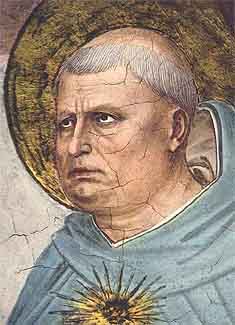
I want to respond soon to some questions which have been raised in earlier posts, but for now here's a brief discussion on one of the famous arguments for the existence of Divinity, the "First Cause." In the West the most famous form of this argument comes from the Summa Theologica of St. Thomas Aquinas.
"I can't fap to this!"
 In the world of sense we find there is an order of efficient causes. There is no case known (neither is it, indeed, possible) in which a thing is found to be the efficient cause of itself; for so it would be prior to itself, which is impossible. Now in efficient causes it is not possible to go on to infinity, because in all efficient causes following in order, the first is the cause of the intermediate cause, and the intermediate is the cause of the ultimate cause, whether the intermediate cause be several, or only one. Now to take away the cause is to take away the effect. Therefore, if there be no first cause among efficient causes, there will be no ultimate, nor any intermediate cause. But if in efficient causes it is possible to go on to infinity, there will be no first efficient cause, neither will there be an ultimate effect, nor any intermediate efficient causes; all of which is plainly false. Therefore it is necessary to admit a first efficient cause, to which everyone gives the name of God.
Note that the argument for a "first cause" does not prove that this cause is omniscient, omnipotent or omnibenevolent. It does not prove that this cause answers to the name YHVH, Allah, Zeus, Odin or Yog-Sothoth. It does not prove the superiority or inferiority of one set of myths over another. Neither does it provide us with any explanation as to why this first efficient cause is an uncaused cause, why it is not contingent on something else.  What it does do is raise a very interesting question, one which has long been pondered by philosophers and stoners alike: how did everything get here?

In his "refutation" of the First Cause argument, Lord Bertrand Russell said:
I may say that when I was a young man and was debating these questions very seriously in my mind, I for a long time accepted the argument of the First Cause, until one day, at the age of eighteen, I read John Stuart Mill's Autobiography, and I there found this sentence: "My father taught me that the question 'Who made me?' cannot be answered, since it immediately suggests the further question `Who made god?'" That very simple sentence showed me, as I still think, the fallacy in the argument of the First Cause. If everything must have a cause, then God must have a cause. If there can be anything without a cause, it may just as well be the world as God, so that there cannot be any validity in that argument. It is exactly of the same nature as the Hindu's view, that the world rested upon an elephant and the elephant rested upon a tortoise; and when they said, "How about the tortoise?" the Indian said, "Suppose we change the subject." The argument is really no better than that. There is no reason why the world could not have come into being without a cause; nor, on the other hand, is there any reason why it should not have always existed. There is no reason to suppose that the world had a beginning at all. The idea that things must have a beginning is really due to the poverty of our imagination. Therefore, perhaps, I need not waste any more time upon the argument about the First Cause. 
What Russell does here is beg the question.  He admits that we cannot answer the question of the Uncaused Cause, claims the question is meaningless, then states that the Universe as a whole IS the Uncaused Cause. Following this tidy dismissal of the whole problem, he states "I need not waste any more time upon the argument about the First Cause." Russell provides no examples of matter, energy or anything else arising ex nihilo: he merely states that "There is no reason why the world could not have come into being without a cause."  Which is rather like saying "There is no reason that God could not have created the world in six days and then rested on the seventh. If you were more intelligent, you'd be able to see the utter necessity of a Creator God. Therefore, perhaps, I need not waste any more time discussing the subject."

And, alas for Lord Russell, there is indeed evidence that the universe as we know it "should not have always existed." As physicist Paul Shestople puts it:
The steady state theory of cosmology claims that the Universe simply exists without changing with time. This theory presents many physical as well as philosophical difficulties. Evidence suggests that the Universe is expanding. While there are ways to explain expansion in a steady state universe, few astrophysicists believe this theory, because there is little evidence to support it. As the first widely held theory about the Universe it is included here for historical completeness. 

The big bang theory states that at some time in the distant past there was nothing. A process known as vacuum fluctuation created what astrophysicists call a singularity. From that singularity, which was about the size of a dime, our Universe was born.
"I say! I can fap to this!"
In other words, at some point billions and billions of years ago, there was nothing. Then out of nothing came a dime-sized Singularity which exploded.  Then there were stars, and then planets. Then life evolved  And then there was 4chan. And to date the best explanation as to how everything arose out of nothing comes from physicist Edward Tryon, who said in 1973 that the birth of the universe was "simply one of those things which happen from time to time."  Which is hardly an airtight refutation to St. Thomas Aquinas's argument: it's merely a more polite restatement of Russell's claim that the whole question is meaningless and can be ignored by sensible atheists.  Rather, one presumes, like those inconvenient fossils can safely be ignored by Young Earth Creationists.

Sunday, April 1, 2012

The True Unbelievers or "G is for Godless"

After reading Jason Miller's posts on Atheism, I decided to drop by PZ Myers' blog. For those of you who don't know PZ Myers, imagine Christopher Hitchens minus the wit. Among his more notorious publicity stunts are  throwing several Eucharist wafers in the trash along with pages from the Q'uran and posting cartoons of Muhammad with the comment "We defy such arbitrary restrictions on our freedom, whether it's a demand that we treat crackers with respect or a demand that we do not render images of some guy, and we violated them, because we can." These antics, presumably, were intended to show that atheism is far more rational, logical and reasonable than any silly superstition. (When a Florida pastor defaces someone else's holy symbols he's a bigot. When PZ Myers does it he's a freedom fighter. From where I stand it looks like both are attention junkies). 

First I should clarify that I have no objection to atheism per se.  I have no interest in winning people over to the True Faith and can hardly imagine that any God worthy of the name would get huffy about the issue.  (Do you really care if some random stranger believes or disbelieves in your existence?) I think atheists do everyone a public service when they insist on drawing hard clear lines between Church and State or between Science and Religion.  It's silly to conflate facts with mythical truths by claiming your holy text trumps hard evidence.  But it's equally silly to claim that Science is the only way by which we can encounter the world and that the universe can be and indeed must be understood only through the tools of logic and mathematics. As Martin Heidegger put it:
The revealing that rules throughout modern technology has the character of a setting-upon, in the sense of a challenging--forth. Such challenging happens in that the energy concealed in nature is unlocked, what is unlocked is transformed, what is transformed is stored up, what is stored up is in turn distributed, and what is distributed is switched about ever anew. Unlocking, transforming, storing, distributing, and switching about are ways of revealing. But the revealing never simply comes to an end. Neither does it run off into the indeterminate. The revealing reveals to itself its own manifoldly interlocking paths, through regulating their course. This regulating itself is, for its part, everywhere secured. Regulating and securing even become the chief characteristics of the revealing that challenges.
The "New Atheists" like to call themselves skeptics. That's a misnomer which does a great disservice to actual skepticism. Skeptics focus on the limitations of their knowledge, trying to determine that which they cannot know. The New Atheists are actually fundamentalist Materialists. They reject as impossible any claims to the "supernatural," by which they mean anything which cannot be explained using the tools and techniques of contemporary science. If it can't be falsified, verified and repeated ala Karl Popper it can't exist. And if it's rejected by the Western scientific establishment (i.e. Qi) it must be nothing but superstition and quackery with any evidence to the contrary being self-delusion or willful fraud.
This of course eliminates any possibility of considering the mystical experience as based in anything but brain anomalies, despite the remarkable continuity in mystical experiences across eras and cultures. It means ignoring data which does not fit neatly into the standard paradigm.  (For years this happened with fibromyalgia and chronic fatigue syndrome: because doctors couldn't find a cause, it was obvious that all those women were just malingering... ). And it means responding with heated emotional attacks when presented with anyone who dares to doubt the rightness of their conclusions.

As I said on PZ's board, the main differences between a Dominionist and a New Atheist are that the Dominionists have more political clout and generally use more temperate and polite language. Needless to say, many of PZ's fans got their knickers in a twist over this statement.  But let's take a close look at some of those similarities.

Both wish to control not only praxis but belief.

Most of us don't really care what our neighbors or our countrymen do in their bedrooms or in their chapels.  We are less concerned with their theology than their behavior: we're happy to leave them to their delusions so long as they leave us to ours. That's the way people co-exist peacefully in polite societies.  We're with Thomas Jefferson, who said "it does me no injury for my neighbor to say there are twenty gods or no God. It neither picks my pocket nor breaks my leg."

The Dominionists, of course, will have none of this. They see tolerance not as a strength but as a great evil: where we see democracy in action they see the wicked kings of Israel and Judah honoring the idols of foreign gods. Alternate beliefs must be attacked and refuted lest their holders go to Hell and take society along with them.  Meanwhile, the New Atheists feel that anyone who has fallen victim to the God delusion should be treated as, well, deluded.  They see tolerance of the God delusion not as a strength but as a great evil. They feel they are morally obligated to engage with believers and to either convert or discredit them. As Gregory Greenwood said on PZ's blog:
Not only is the god belief unevidenced and irrational, it is also actively harmful. Given the ludicrously long odds against the existence of any such being, it is not only acceptable for rationalists to point out how ridiculous the idea is, it is irresponsible of us not to.
Both are convinced of the rightness of their own cause and the wrongness of everyone else's

The Dominionists rely on the King James Version of the Bible for their reasoning. The New Atheists rely on things like Parsimony, Occam's Razor, Russell's Teapot and various other logical puzzles which "disprove" the existence of the supernatural to their satisfaction. There's only one little problem: they miss the distinction between deductive and inductive logic.  If the premises of a properly constructed deductive argument are true, then the conclusion must be true. While inductive logic can suggest that something is true or false with a greater or lesser degree of likelihood, it cannot prove or disprove anything.  It is entirely possible to come to wrong conclusions via Occam's Razor: if it weren't, Agatha Christie and other mystery writers would have been out of a job long ago.  What looks on the surface to be the most plausible answer is not necessarily the correct one.  (There are other problems with many of their "arguments" which I hope to address in later entries, but for now my point is that they claim that their use of logic has provided them with the same degree of certainty as the Dominionists give to their revealed texts - and they are just as mistaken).

There's also the issue which they keep ducking: science can provide us with evidence that a "Big Bang" happened, with evidence of evolution, with the laws of thermodynamics and quantum mechanics, etc.  But it cannot explain WHY that Big Bang happened or why our universe has the structure it does. As Consciousness Razor puts it on PZ's blog:
I’m not a physicist either. As I understand it, that’s a possibility, but it requires a certain model of the BB which isn’t necessarily the case. It could be that there is infinite spacetime in the past and the BB only makes it impossible to know much about it (though if we can’t know anything about it, then I’m not sure how that could be supported with evidence). To give another example, a multiverse theory explaining the BB could be about causes in the multiverse’s framework. Anyway, I guess the relevant point is that those would rely on a legitimate causal mechanism based on evidence, rather simply making shit up about imaginary intelligent beings.
Also, Carrier recently put forward an argument that basically says “nothing comes from nothing” is false. If we suppose nothing exists and try to figure out what logically follows from that state, then we’re also supposing that anything logically necessary also “exists” — that is, it’s true and exists in that sense. Since none of that entails something else (which isn’t logically necessary) cannot exist, then that something is possible. So even if physical theories wouldn’t be able to offer a causal explanation, there’s still no reason to believe something coming from nothing is logically impossible.

Which gets us right back to the question of why there are multiverses instead of a great void? And how is it that "something" comes from "nothing?"  Instead of admitting "we don't know" the typical New Atheist response is "there are no SKY FAIRIES BECAUSE I SAID SO!!!" Which is, honestly, no more convincing than thumping on a Bible and threatening me with hellfire.

Both feel the rightness of their cause trumps rules of polite social discourse

Most of us agree that defacing holy books, desecrating icons, etc. is bad form and those who do it are worthy of condemnation.  PZ thinks it's just fine and dandy to toss consecrated hosts in the garbage along with pages from the Q'uran and then post the video of same for all the world to see.  In fighting the Evil Dominionists, he's managed to sink to their level and show the same kind of violent intolerance they espouse.

And let's see some of the other polite discourse from the followers of reason and rationality:

Here's "Chris P" speaking out on Jason Miller's blog:
Sorry but being “nice” didn’t work. My mother said to live by example – that doesn’t work. If I religiously use my turn signals – other people don’t bother.
If you want to talk social skills – I suggest you talk to the evangelical Christian on the other side of the cubicle wall. He farts, he belches, he eats while he is on the phone to customers and suppliers, he swears like a trooper, he loses his temper, …..
Not standing for BS is a GOOD social skill. How much more certainty do we have to have? You’ve had 2000 plus years and still cannot agree on which religion is right – I think you’ve fouled out and don’t deserve a seat at the table anymore.
 And  here's Colonelzen on PZ Myers' blog:
Definition of an asshole: someone who won’t change what he’s saying to accomodate your sensibilities.
Yes we’re assholes. Reality is what doesn’t change no matter how you feel about it.
We’re arguing that that the reality is more important than fairy tales.
Ok, we’re assholes. We know it. We won’t change what we’re saying to make you feel better.
Reality doesn’t care. We may care but can’t change it. Recognising that requires that we be assholes.
So we’re assholes. So is reality. Get over it.
This sort of discourse has nothing to do with rationalism or reason: it's a bunch of angry socially challenged people acting out like a toddler finger-painting with his own poop.  And they justify their fecal artistry by claiming they have a moral imperative, that the rightness of their cause is such that they must get their message out no matter whom they offend.  One must wonder what would happen if they had the power to enforce their "No God, No Way, No How" message by means other than making rude posts on the Internet.

Saturday, March 31, 2012

Today's Hot Topic: Atheism

On his always excellent blog, Jason Miller posted an entertaining complaint about the behavior of the "New Atheists," then took it down for the reasons he describes in the linked post.  Since I had added a couple of my own thoughts to the deleted post - and since several of the "New Atheists" are still acting out in exactly the fashion he described him - I thought I'd touch upon the subject here.

First of all, let's talk about that favorite atheist slogan: "Morality is doing what is right regardless of what you are told.  Religion is doing what you are told regardless of what is right."


Ted "the Unabomber" Kaczynski believed he was doing right despite what he was told.  So did Charles Manson.  So does every garden-variety sociopath.   Hell, I'd go so far as to say just about everyone does - or tries to do - what they believe is right. Outside of horror movies there are very few people who knowingly and willfully do evil for the sake of being evil.  Sure, there's often a whole lot of self-justification and reframing of events involved in the decision that "I was right to do that." But that's hardly confined to religious folks. You can certainly use your religious text of choice to assuage your conscience. But you can also use your troubled childhood, your political opinions, your end which justifies the means or any number of other excuses that have nothing to do with deities. 

Now let's take a look at some of those people doing repellent things in the name of "religion." The folks who bomb abortion clinics and shoot abortion providers believe they are doing right regardless of what they have been told.  Their actions aren't just illegal, they are strongly discouraged by the vast majority of Christian pastors.  Yet they decide that "God's law" - what they believe is right - trumps man's law and trumps the simpering milquetoast claims of all those self-proclaimed Christians who don't want to walk the walk.  Do people become monsters because of religion, or do they use religion to justify their monstrosity? Religion can become dangerous in the hands of dangerous people - but so can just about anything.  People kill each other in the name of various deities, but they also kill each other in the name of gang affiliation, ethnicity and favorite sports teams.

If religion is "doing what you are told regardless of what is right," what are we to make of Stalinism, Maoism and the various other Marxism-inspired political systems which place a premium on toeing the "Party Line?" If we're going to tar all Christians as potential inquisitioners and all Muslims as potential terrorists, then should we assume that inside every atheist there's a Kim Jong-Il waiting to get out?  What about groups like the Symbionese Liberation Army, the Baader-Meinhof Gang, or various other revolutionaries who were inspired to commit all sorts of atrocities in the name of a secular utopia-to-come?

And while we're on the subject: who is arrogant enough to think that they always know enough to "do right" without any input from others on the subject at hand?  Ethical questions are rarely clear-cut and frequently have enormous consequences at stake. Most people are happy to take expert advice on difficult topics. Everyone from Socrates to Tucker Max is consulted in the quest to a more ethical life: in the vast majority of cases they are given a vote but not a veto. And if we are capable of using Anthony Robbins or Jean-Paul Sartre as a guide toward rational decisions, why could we not use the Rig Vedas or the Q'uran in a similar fashion?

The answer, of course, is that most religious people do just that. Their religion shapes their worldview but doesn't trump their common sense.  But that's not what the Loud Atheists (i.e. strong atheists who won't shut up and stop waving their godless pee-pees in everyone's face) want to hear.  For all their talk about simple-minded religious mythologizing, they are desperately seeking a nice clean black-and-white world with clearly defined enemies and unquestionable answers.  Where their hated "Fundamentalists" divide the universe into "God's people" and "the Devil's servants," they see society as a battle of Enlightened Atheists vs. Silly Superstitious Religious Fanatics. 

Elf Sternberg commented that the mind is like a barrel of fine wine and religion is the teaspoonful of sewage that ruins said fine wine.  I note that Galileo was a devout Catholic, even after that unpleasantness with the Inquisition.  And while I remember some of Elf's contributions to the various alt.sex.* groups with fondness, I gotta say it: you, Mr. Sternberg, are no Galileo.  You are no Einstein.  You are no Olivier Messiaen, no Henryk Gorecki, no Shusaku Endo.  Hell, looking at your science fiction I'd say that you're not even up to filling Orson Scott Card's magic underwear.  Whatever one may think about the merits of Theism, only the most deluded dipshit would deny the contributions made to the world by people who believed in one deity or another.

Another anonymous atheist commented "We're assholes. Reality is an asshole. Get over it."  This is exactly the kind of behavior Jason was complaining about in his earlier post.  It's not exactly the height of rational argument - but then, the commenter wasn't interested in rational argument. He wants to scream his rage at Big Daddy God and the Sky Fairies into the abyss, hoping he can find other disgruntled unbelievers to share the emptiness with him.  Which is fine: we all make decisions based on emotion as well as logic. But don't kid yourself into believing that "the Bible said it, I don't believe it and that settles it" is more rational than any other ardent declaration of faith.

Do I have a particular problem with atheism in and of itself? Not at all. Like most other belief systems, it produces reasonably moral behavior when followed by reasonably moral people.  But neither do I see any particular evidence that its followers are in any way ethically or intellectually superior to those poor benighted believers they mock.  Believing in God/s doesn't automatically make one a sinner: neither does disbelieving in them automatically give the disbeliever any kind of special enlightenment.